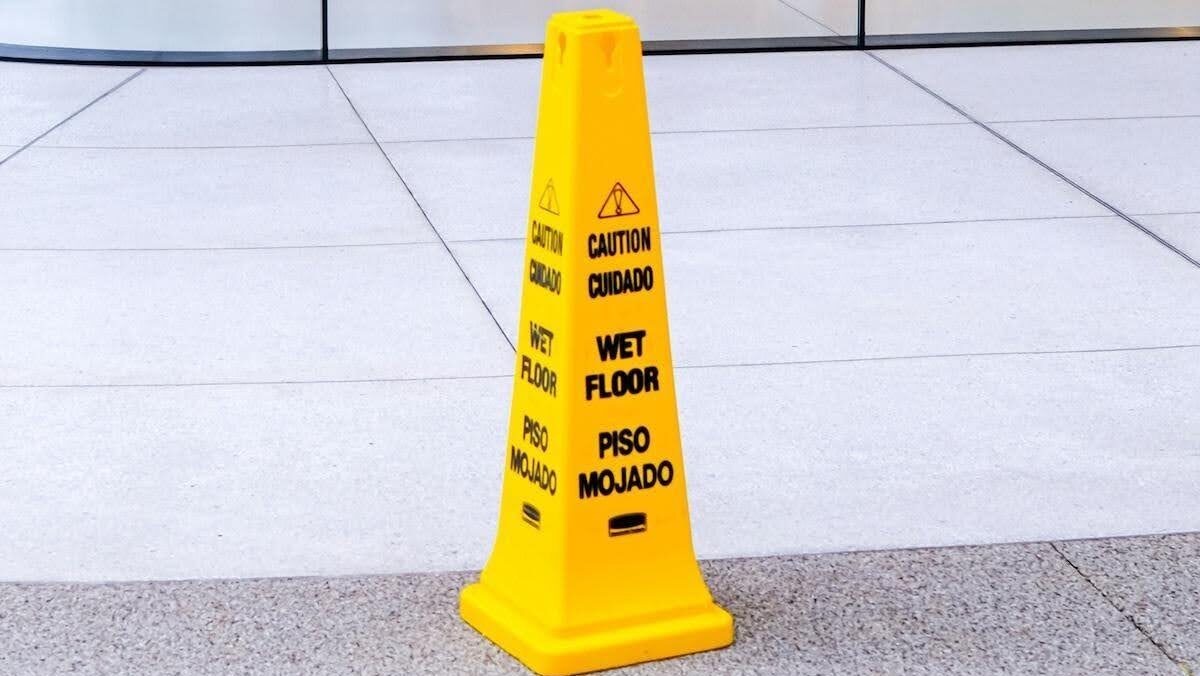
A store is not automatically liable just because you fell. Under California premises liability law, the business is responsible only if it knew, or should have known, about the hazard and failed to fix it in a reasonable time. How long the hazard existed is usually the decisive question, and your own share of fault reduces but does not erase recovery.
Southern California shops at scale. The corridors of South Coast Plaza in Costa Mesa, the vast footprint of the Del Amo area in Torrance, and the regional centers serving Lakewood, Whittier, and West Covina draw enormous foot traffic. With that traffic comes a steady stream of falls — and a body of law about who is responsible when they happen.
When is a store liable for a slip-and-fall?
Premises liability is the legal principle that property owners and businesses owe visitors a duty to keep their premises reasonably safe. A slip-and-fall claim generally turns on whether the owner knew, or should have known, about a hazard — a spill, a broken stair, a poorly lit walkway — and failed to fix it or warn about it in a reasonable time. The mere fact that you fell does not, by itself, make the store liable. The question is whether the business acted reasonably.

Why does it matter how long the hazard was there?
This is where these cases are won or lost. If a shopper drops a drink in a Lakewood store and you slip thirty seconds later, the business likely had no reasonable chance to discover and clean it — a hard case. If that same spill sat for an hour with employees walking past, the business had constructive notice, and the analysis changes entirely. Evidence of how long a hazard existed — incident reports, surveillance footage, maintenance logs — is the heart of the matter, and much of it is in the store’s possession.
Can I still recover if I wasn’t paying attention?
Were you looking at your phone? Wearing unstable shoes? A store will raise these points, because under California’s pure comparative negligence rule (Li v. Yellow Cab Co. (1975) 13 Cal.3d 804) your own share of fault reduces your recovery. But it does not eliminate it. A shopper found 30 percent responsible for a fall in a West Covina center can still recover 70 percent of their damages.

The Takeaway
A fall at a shopping center is not automatically the store’s fault — but where a hazard lingered and the business failed to act, California law provides a real remedy for trip-and-fall injuries. Report the fall before you leave, ask that an incident report be made, photograph the hazard, and remember the two-year deadline under Code of Civil Procedure section 335.1 is running from the day you fell.
Frequently Asked Questions
Is a store automatically responsible if I fall there?
No. The store is liable only if it knew, or reasonably should have known, about the hazard and failed to address it in a reasonable time. The mere fact that you fell is not enough.
What is “constructive notice” in a slip-and-fall case?
It means the hazard existed long enough that the business should have discovered and fixed it. A spill that sat for an hour while staff passed by suggests constructive notice; one that appeared seconds earlier usually does not.
Can I recover if I was partly at fault for falling?
Yes. Under California pure comparative negligence, your recovery is reduced by your percentage of fault but not eliminated — someone 30% at fault can still recover 70% of their damages.
What should I do right after falling in a store?
Report it and ask for a written incident report, photograph the hazard and any missing warning signs, get witness names, and seek medical care. The two-year filing deadline runs from the date of the fall.